
Table of Contents
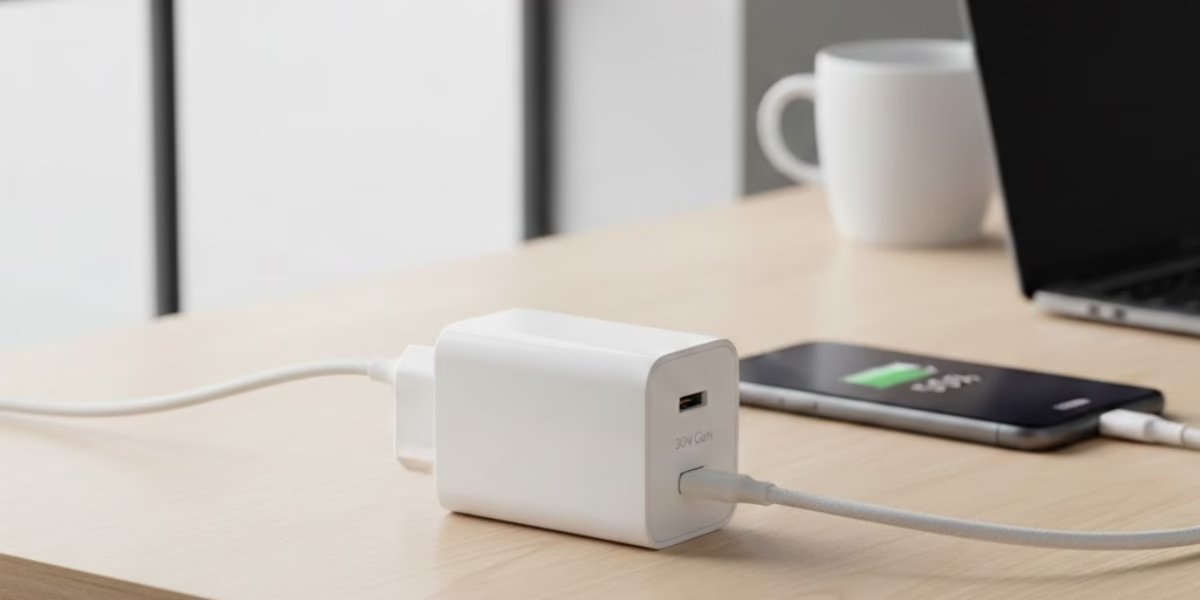
In today’s fast-paced digital world, waiting hours for your devices to charge is no longer acceptable. Whether you’re rushing to a meeting, traveling, or simply need your phone ready quickly, a 30W charger has become the sweet spot between affordability and performance.
This comprehensive guide will help you understand everything about 30W fast chargers and why they might be the perfect charging solution for your devices.
What is a 30W Charger and Why Does It Matter?
A 30W charger is a modern USB-C power adapter that delivers up to 30 watts of power using advanced charging protocols, such as USB Power Delivery (USB-PD).
Unlike traditional 5W or 10W chargers that came with older phones, a 30W fast charger can significantly reduce charging times for smartphones, tablets, and even lightweight laptops.
Key Benefits at a Glance:
- Charges most smartphones to 50% in just 25-30 minutes
- Compatible with iPhones, Samsung Galaxy, Google Pixel, and iPad devices
- Compact size ideal for travel and everyday carry
- Future-proof investment as devices demand more power
- Universal USB-C compatibility across multiple brands
30W vs 20W Charger: Understanding the Real Difference
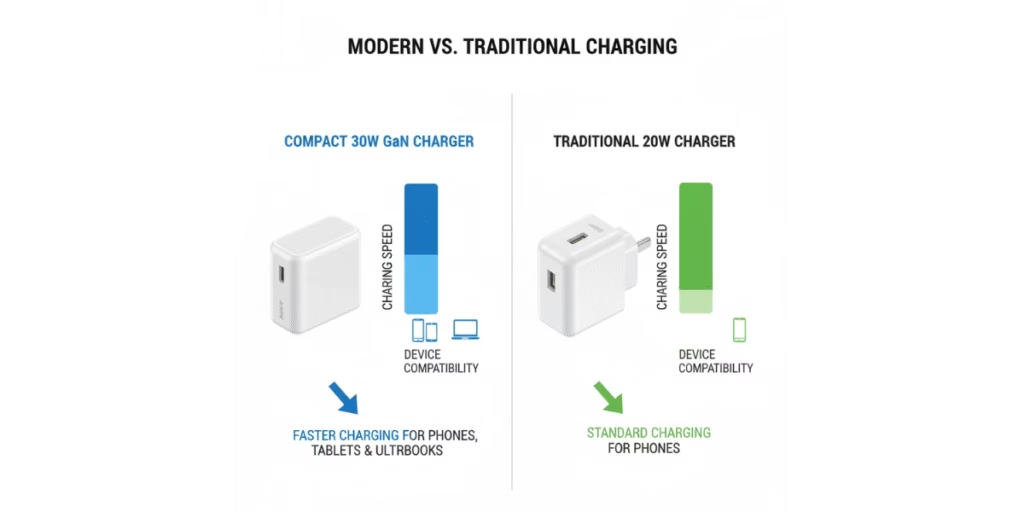
Many users wonder whether upgrading from a 20W to a 30W charger is worth it. The answer depends on your specific needs and devices.
Charging Speed Comparison
When it comes to pure charging speed, a 30W charger offers noticeable improvements, especially during the critical 0-50% charging phase. Modern smartphones, such as the iPhone 15, Samsung Galaxy S24, and Google Pixel 8, can take advantage of higher wattage for faster top-ups. However, the difference becomes minimal after 60% battery level due to built-in battery protection mechanisms that slow charging to preserve battery health.
Real-World Performance:
- iPhone charging: 30W charger provides 25-27W peak power vs. 18-19W from 20W charger
- 0-50% charging: Approximately 5-10 minutes faster with 30W
- 0-100% charging: Roughly 8-15 minutes faster overall
- Tablet charging: More significant difference, up to 20-30 minutes faster
Device Compatibility and Future-Proofing
A 30W USB-C charger offers broader compatibility compared to 20W options. While a 20W charger handles most smartphones adequately, a 30W charger can efficiently charge:
- All modern smartphones (iPhone, Samsung, Google Pixel)
- Tablets like iPad Air and iPad Pro (11-inch)
- Lightweight laptops, including MacBook Air
- Wireless earbuds and smartwatches
- Nintendo Switch and portable gaming devices
The extra 10 watts make a substantial difference for larger devices and multi-device charging scenarios, making the 30W charger a more versatile investment.
GaN Technology: Why It Matters for Your 30W Charger
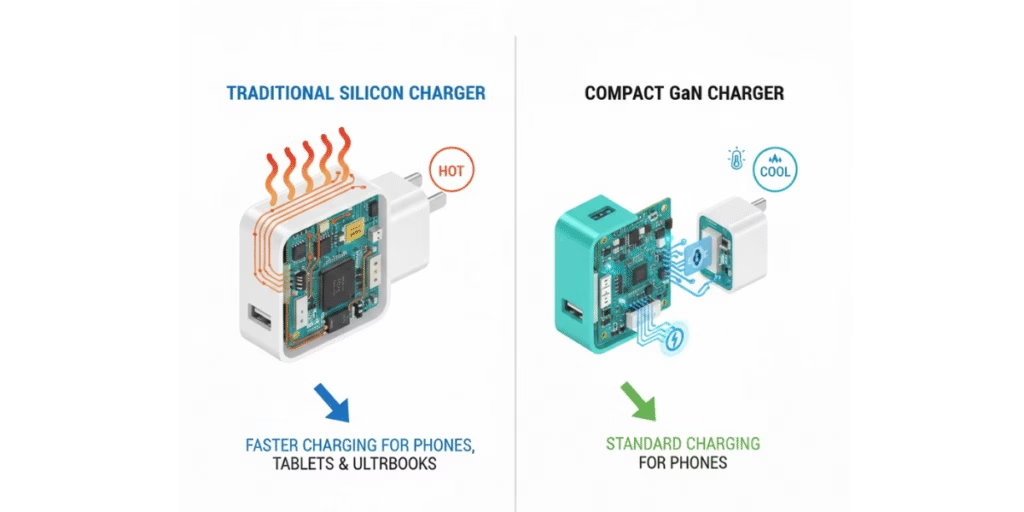
Gallium Nitride (GaN) technology has revolutionized the charger industry. Unlike traditional silicon-based chargers, GaN chargers offer several advantages:
- Superior Efficiency: GaN semiconductors conduct electricity more efficiently, resulting in less energy waste and lower electricity bills.
- Compact Design: GaN technology enables manufacturers to create chargers that are 40-50% smaller than traditional chargers while maintaining the same power output. This makes GaN 30W chargers perfect for travel and everyday carry.
- Better Heat Management: GaN chargers generate significantly less heat during operation, which means safer charging and longer charger lifespan. The cooler operation also protects your devices from thermal damage.
- Environmental Benefits: Higher efficiency means less wasted energy, making GaN chargers more environmentally friendly. Many manufacturers also use recycled plastics in GaN charger housings.
Essential Features to Look for in a 30W Fast Charger
When shopping for the best 30W charger, certain features separate excellent products from mediocre ones:
Safety Certifications and Protection
Your charger should include multiple safety features:
- Overcurrent Protection: Prevents excessive current from damaging your device
- Overvoltage Protection: Safeguards against voltage spikes
- Overheating Protection: Automatic shutoff if temperature exceeds safe limits
- Short Circuit Protection: Protects both the charger and the device from electrical faults
Look for certifications like UL, CE, FCC, or RoHS, which indicate the product meets international safety standards.
Power Delivery Protocol Support
Ensure your 30W charger supports USB Power Delivery 3.0 or later. This protocol enables dynamic power negotiation, allowing the charger to communicate with your device and deliver the optimal charging speed safely.
Key Voltage Profiles to Check:
- 5V/3A (15W): Standard USB devices
- 9V/3A (27W): Most smartphones
- 12V/2.5A (30W): Tablets and small laptops
- 15V/2A (30W): iPad Pro and MacBook Air
- 20V/1.5A (30W): Larger devices
Build Quality and Portability
A quality 30W USB-C charger should feature:
- Durable housing resistant to daily wear
- Foldable or compact prongs for travel
- Proper heat dissipation design
- Reinforced cable connection point (if cable included)
- Lightweight construction (typically 40-60 grams)
Who Should Buy a 30W Charger?
Perfect For:
- Multi-Device Users: If you own an iPhone, iPad, and AirPods, a single 30W charger can handle all three
- Frequent Travelers: The compact size and universal compatibility make it ideal for travel
- Power Users: Those who heavily use devices for gaming, streaming, or professional work
- iPhone 15/16 Owners: These models support up to 27W charging, making 30W optimal
- Tablet Owners: iPad Air and iPad Pro benefit significantly from 30W charging speeds
Consider 20W Instead Of:
- You only charge older smartphones (iPhone 13 and earlier)
- Budget is extremely tight (though the price difference is minimal)
- You never charge tablets or laptops
- Charging speed above 20W isn’t a priority
Top Use Cases for 30W Fast Charging
- Morning Rush Scenario: Need to leave in 30 minutes? A 30W charger can boost your dead phone to 50-60%, providing enough power for the entire day.
- Office Desk Setup: One 30W charger can serve as your primary charging station, handling your phone during the morning, tablet at lunch, and wireless earbuds in the afternoon.
- Travel Companion: Instead of packing multiple chargers, a single GaN 30W charger replaces your phone, tablet, and lightweight laptop chargers.
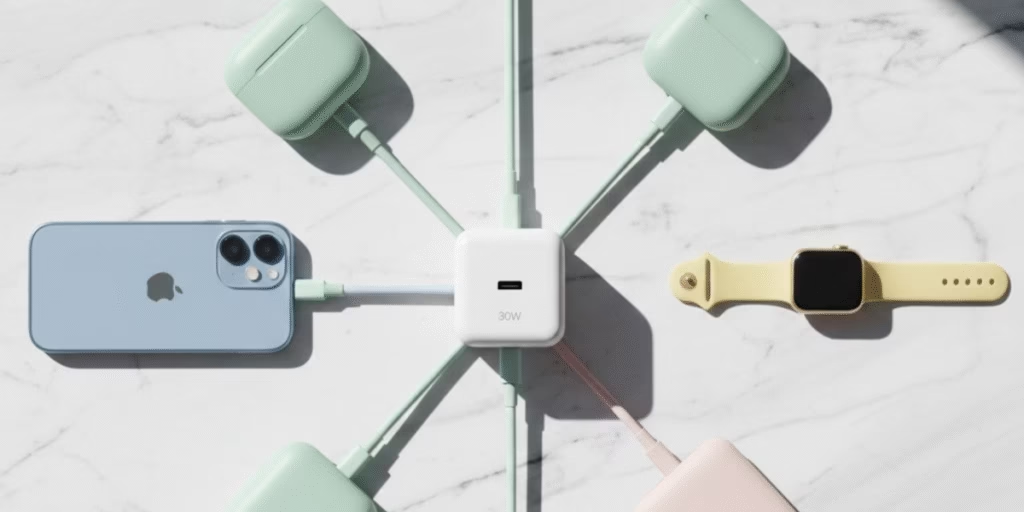
- 3-in-1 Wireless Charging: Modern wireless charging pads that charge phones, watches, and earbuds simultaneously require at least 30W input power for optimal performance. A 20W charger will struggle with this setup.
Understanding USB-C PD and PPS Charging
Modern fast charging relies on two key technologies:
- USB Power Delivery (USB-PD): This standard allows chargers and devices to communicate and negotiate the optimal charging parameters. Most 30W chargers support PD, making them compatible with a wide range of devices.
- Programmable Power Supply (PPS): An extension of USB-PD, PPS enables even finer control over charging voltage and current. Samsung Galaxy phones and Google Pixel devices especially benefit from PPS support, achieving faster and more efficient charging.
When choosing a 30W charger, look for both PD and PPS support to ensure maximum compatibility and charging speed across all your devices.
Common Myths About 30W Chargers Debunked
- Myth 1: “A 30W charger will damage my 20W phone.” False. Modern smartphones include intelligent charging controllers that only draw the power they can safely handle. Using a 30W charger with a 20W phone is completely safe; it will simply charge at 20W.
- Myth 2: “Fast charging ruins battery health.” Partially false. Modern devices include sophisticated battery management systems. Charging slows automatically after 60-80% to protect battery longevity. Using an appropriate fast charger won’t significantly impact battery life over the device’s typical usage period.
- Myth 3: “All 30W chargers are the same.” False. Quality varies significantly. Cheap, uncertified chargers may not deliver true 30W power, lack proper safety features, or use inefficient components that generate excessive heat.
- Myth 4: “I need the same brand charger as my device.” False. Thanks to USB-C PD standardization, any quality 30W charger from reputable manufacturers works excellently with devices from Apple, Samsung, Google, and others.
Price vs. Performance: What to Expect
Quality 30W chargers typically range from $15 to $50 depending on features and brand:
- Budget Tier ($15-$25): Basic 30W chargers with standard safety features, adequate for most users who need simple, reliable charging.
- Mid-Range ($25-$35): GaN technology, compact design, multiple safety certifications, and often includes a USB-C cable. Best value for most consumers.
- Premium Tier ($35-$50): Top-tier GaN technology, premium materials, multiple ports, advanced safety features, and longer warranties. Ideal for power users or those wanting the absolute best.
The sweet spot for most users is the mid-range category, which offers excellent performance without unnecessary premium features.
Environmental Impact and Sustainability
Modern 30W chargers, especially those using GaN technology, are more environmentally friendly than older chargers:
- Higher Efficiency: Less electricity wasted as heat means a lower carbon footprint
- Longer Lifespan: Quality chargers last 3-5 years, reducing electronic waste
- Universal Compatibility: One charger for multiple devices eliminates redundancy
- Recycled Materials: Many manufacturers now use 70-90% recycled plastics in housing
By investing in one quality 30W charger instead of multiple device-specific chargers, you’re making an environmentally responsible choice.
Making the Right Purchase Decision
When selecting your 30W charger, consider these final factors:
- Immediate Needs: What devices do you charge daily? Ensure compatibility with all of them.
- Future Devices: Planning to upgrade your phone or buy a tablet? A 30W charger provides headroom for future purchases.
- Travel Requirements: If you travel frequently, prioritize compact GaN models with foldable prongs and universal voltage support (100-240V).
- Budget Constraints: Don’t sacrifice safety for savings. A quality $25 charger is far better than a $10 charger without proper certifications.
- Brand Reputation: Stick with established brands known for quality and customer support. Check reviews and warranty terms.
FAQs
Is a 30W charger safe for an iPhone?
Yes, absolutely. iPhones from the iPhone 8 onwards support fast charging, and newer models like the iPhone 15 can accept up to 27W. The iPhone will only draw the power it safely needs, making a 30W charger perfectly safe and optimal.
Can I charge my laptop with a 30W charger?
It depends on the laptop. Lightweight laptops like the MacBook Air (M1/M2), some Chromebooks, and ultrabooks can charge with 30W, though it may be slower than with their original chargers. High-performance laptops and gaming notebooks typically require 60W or more.
What’s the difference between USB-C PD and regular USB-C charging?
USB-C PD (Power Delivery) is a fast-charging protocol that allows higher power delivery (up to 100W for PD 3.0) and intelligent communication between charger and device. Regular USB-C without PD is limited to lower power levels (typically 15W or less) and lacks intelligent power negotiation.
Will a 30W charger make my phone hot?
Quality 30W chargers should not cause excessive heating. Some warmth is normal during fast charging, especially in the 0-50% range. Modern devices include thermal management that reduces charging speed if temperatures get too high. If your device becomes uncomfortably hot, stop using that charger.
Can I use one 30W charger for all my devices?
Yes, one of the key advantages of 30W chargers with USB-C PD is universal compatibility. You can use the same charger for your phone, tablet, earbuds, smartwatch, and even lightweight laptops; just switch the appropriate cable.
Are GaN chargers worth the extra cost?
Generally, yes. GaN chargers are more compact, run cooler, and are more efficient than traditional silicon-based chargers. The price difference has become minimal (often just $5-10), making GaN technology worthwhile for most users, especially frequent travelers.
How long will a 30W charger last?
A quality 30W charger from a reputable manufacturer should last 3-5 years with normal use. Factors affecting lifespan include build quality, frequency of use, and how you handle it (avoid pulling on cables, protect from drops).
Conclusion
A 30W charger represents the ideal balance of speed, versatility, and value in today’s charging landscape. Whether you’re an iPhone user looking to charge faster, a multi-device owner seeking convenience, or a traveler wanting to minimize cable clutter, a quality 30W USB-C charger meets these needs admirably.
The small price premium over 20W chargers (often just $5-10) is justified by the significantly broader device compatibility, faster charging for tablets and larger phones, and future-proofing for upcoming devices. With GaN technology making these chargers smaller and more efficient than ever, there’s never been a better time to upgrade.
When making your purchase, prioritize safety certifications, GaN technology, USB-C PD support, and an established brand reputation. Your devices deserve reliable, fast, and safe charging, and a quality 30W charger delivers exactly that.


3 thoughts on “30W Charger: The Ultimate Buying Guide for Fast Charging in 2026”