
Table of Contents
Adding a bathroom to your basement is a game-changer. It transforms a dark, unused space into a functional guest suite or a rental unit, instantly boosting your home’s value. But before you pick up a sledgehammer, you need to understand one thing: basement bathroom plumbing is a battle against gravity.
Unlike upstairs bathrooms, where waste flows down naturally, a basement is often located below the main sewer line. This creates unique challenges that, if ignored, can lead to messy backups and costly repairs. In this guide, I’ll walk you through the systems, costs, and professional secrets to getting it right the first time.
The Gravity Challenge: Why Basement Plumbing is Different
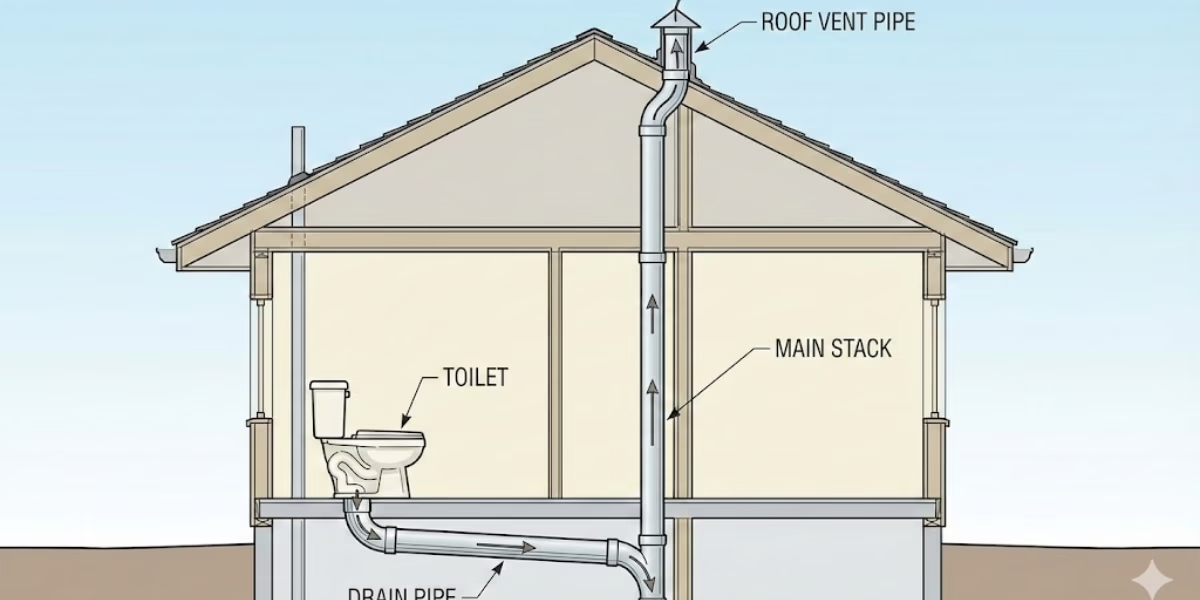
In standard plumbing, gravity does all the work. When you flush an upstairs toilet, waste falls into the sewer. In a basement, you are “below grade.” If your main sewer exit is higher than your basement floor, you have to literally push waste uphill.
Below-Grade vs. Above-Grade
- Above-Grade: Simple pipes that rely on a downward slope.
- Below-Grade: Requires mechanical help (like an ejector pump) to move waste up to the main line. Without this, there’s simply nowhere for the waste to go.
Main Systems for Basement Bathrooms
Choosing the right system depends on your home’s existing layout and your budget.
1. Sewage Ejector Pump System (Most Common)
This is the “gold standard” for basements below the sewer line.
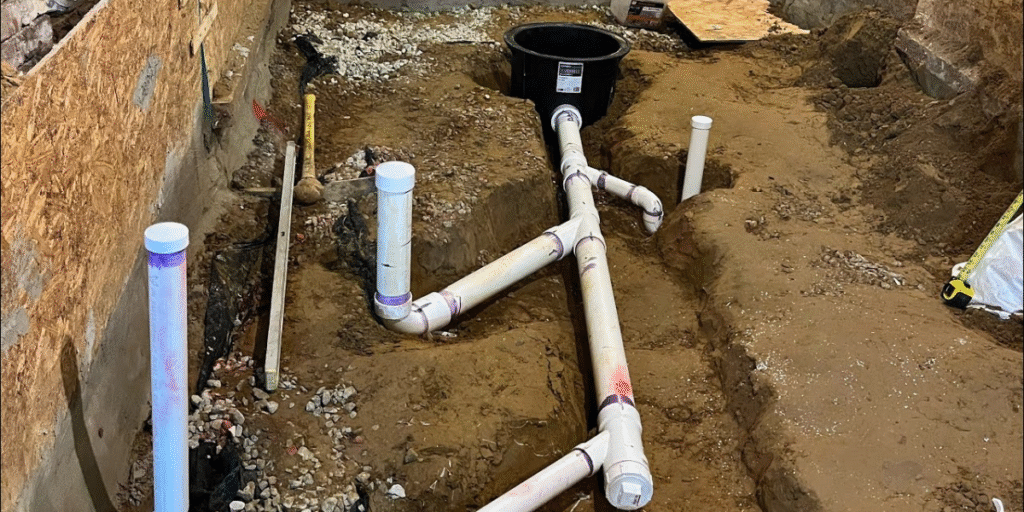
- How it works: Waste from the toilet and sink flows into a sealed basin buried in the floor. When the basin fills, a float switch triggers a powerful pump that “ejects” the waste up into the main sewer line.
- Cost: Expect to pay between $1,500 and $3,500 for a full professional setup.
- Pro Tip: Always install a check valve on the discharge pipe to prevent waste from flowing back into the pump.
2. Gravity-Fed System (The Lucky Option)
If you’re lucky enough to have a “walk-out” basement or a very deep sewer line, you can use gravity.
- Requirements: Your drain pipes must have a slope of at least 1/4 inch per foot.
- Pros: No moving parts, no electricity needed, and zero noise.
Comparison Table: Which System is Best?
| Feature | Sewage Ejector Pump | Up-Flush Toilet (Macerating) | Gravity System |
| Breaking Concrete | Yes (Lots of it) | No (Surface mount) | Yes (Moderate) |
| Best For | Full Bathrooms | Half Baths/Easy DIY | Sloped Properties |
| Reliability | High (Mechanical) | Moderate | Very High |
| Average Cost | $2,500+ | $1,000 – $2,000 | $1,500+ |
Step-by-Step Installation: The “Rough-In” Process
The “rough-in” is the skeleton of your bathroom. If this is wrong, nothing else matters.
- Layout & Permits: Mark exactly where the toilet, shower, and sink will go. Basement bathroom plumbing codes vary by city, so get your permit first.
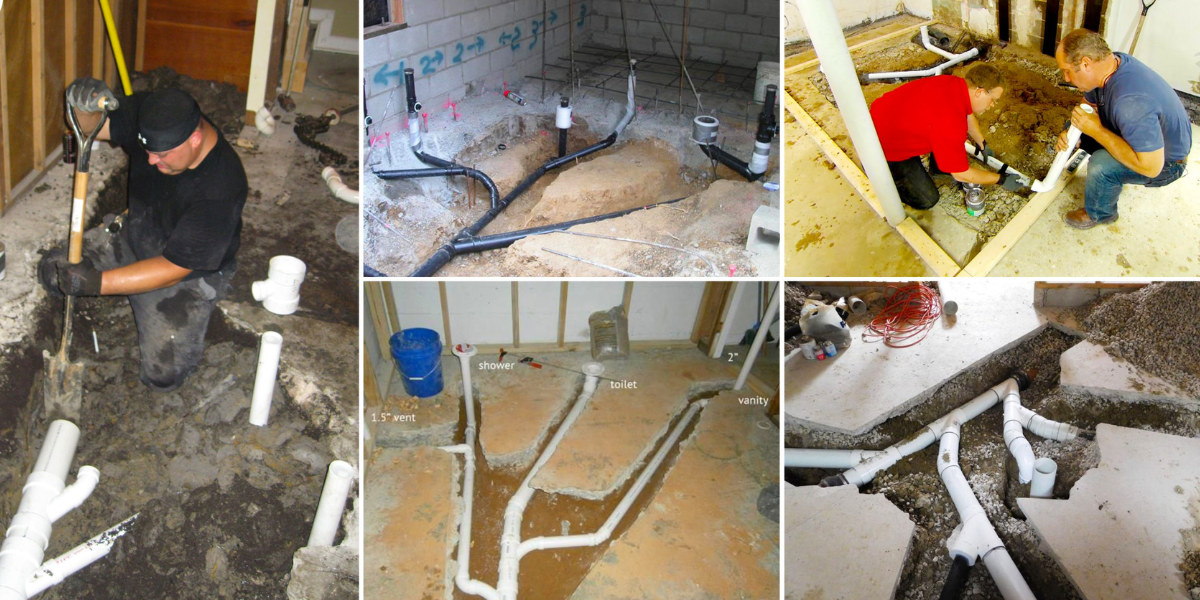
- Trenching the Concrete: Unless you use an up-flush toilet, you’ll need to cut the concrete floor. Use a concrete saw and a jackhammer to create trenches for your drain lines.
- The Slope is King: Your drain pipes must tilt downward towards the ejector pit. If the slope is too flat, you’ll get clogs. If it’s too steep, water will outrun the solids.
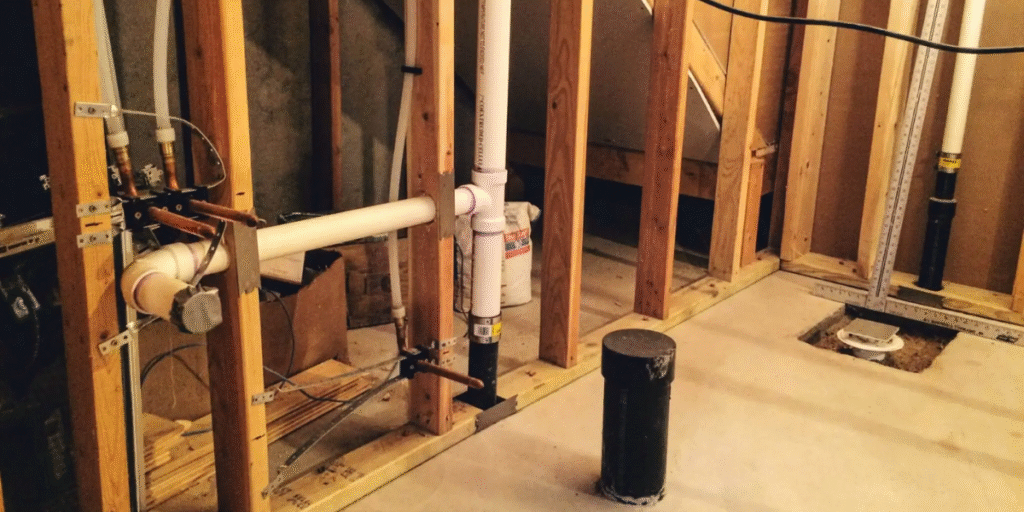
- Venting (The Secret to No Odors): Every basement bathroom needs a vent to prevent sewer gases from entering your home. If you can’t run a pipe to the roof, check if your local code allows an Air Admittance Valve (AAV).
- Connecting to the Main: Use a Y-fitting (not a T-fitting) to connect your new lines to the main stack to ensure smooth flow.
Common Mistakes to Avoid (Save Your Money!)
- Ignoring the Drum Trap: If you find an old-style drum trap while digging, replace it immediately. Modern codes require P-traps because they are easier to clean and safer.
- Wrong Pipe Size: Toilets need a 3-inch pipe minimum. Trying to squeeze it into a 2-inch pipe is a recipe for a disaster you don’t want to clean up.
- Forgetting the Backwater Valve: Many basements require a backwater valve to prevent the city sewer from backing up into your shower during a heavy storm.
Cost Breakdown: DIY vs. Pro
| Expense Type | DIY Cost | Professional Cost |
| Materials & Fixtures | $800–$1,500 | Included |
| Ejector Pump System | $1,000–$1,800 | $2,500–$4,000 |
| Concrete & Labor | Your Sweat Equity | $2,000–$5,000 |
| Permits | $100–$400 | $100–$400 |
| Total | $1,900 – $3,700 | $5,000–$10,000 |
Frequently Asked Questions
Can I install a basement toilet without breaking concrete?
Yes! You can use an up-flush (macerating) toilet like Saniflo. It sits on top of the floor and pumps waste through a small 1-inch pipe.
How do I stop my basement bathroom from smelling?
Proper venting is the only way. If you hear a “gurgling” sound when you flush, your vent is likely blocked or too small. Learn more about Basement Bathroom Repair to fix odor issues.
What is a sewage ejector pump vs. a sump pump?
A sump pump is for groundwater only. A sewage ejector pump is designed to handle solids and waste. Never mix the two!
Conclusion
A basement bathroom is a big project, but it’s one of the best investments you can make. Whether you go with a traditional ejector pump or a DIY-friendly up-flush toilet, the key is planning. Don’t cut corners on the “rough-in,” and when in doubt, call a licensed plumber for the heavy lifting.
Great post! It’s fascinating how decision biases can cloud our judgment in high-stakes scenarios. For those looking to harness AI in business, tools like the AI Business Ideas Generator can offer clarity and fresh insights.
Gave luckyslot1 a go last night. Didn’t get rich but had a laugh. Nothing too special, but solid enough. Take a look at luckyslot1, could be your lucky day.